
+- Hack Forums (https://hackforums.net)
+-- Forum: Hacks, Exploits, and Various Discussions (https://hackforums.net/forumdisplay.php?fid=45)
+--- Forum: Grayhat • Purple Team • Hybrid Security (https://hackforums.net/forumdisplay.php?fid=449)
+---- Forum: Beginner Hacking (https://hackforums.net/forumdisplay.php?fid=4)
+----- Forum: Hacking Tutorials (https://hackforums.net/forumdisplay.php?fid=47)
+----- Thread: [Legends] What is and how to use Gobuster: A Comprehensive Guide for Ethical Hacking (/showthread.php?tid=6289581)
What is and how to use Gobuster: A Comprehensive Guide for Ethical Hacking - JoseMar - Jan 14, 2025
What and how to use Gobuster
A Comprehensive Guide for Ethical Hacking
Introduction Gobuster is a powerful, fast, and efficient tool commonly used in ethical hacking and penetration testing to brute force directories, files, DNS subdomains, and virtual hosts. It’s written in Go programming language, which makes it exceptionally fast compared to other tools in the same category. In this document, we’ll dive into what Gobuster is, how it works, and provide hands-on examples to help you understand its application in your virtual laboratory.
What is Gobuster?
Gobuster is an open-source command-line tool that is primarily used to:
- Discover hidden directories and files on web servers.
- Enumerate DNS subdomains.
- Identify virtual hosts on a server.
Unlike other tools that use recursive methods or rely on parsing, Gobuster performs brute-force attacks based on a provided wordlist, which makes it ideal for speed and efficiency.
Installing Gobuster
Before you start using Gobuster, ensure you have it installed on your system. Here’s how to set it up:
- For Debian-based systems (Ubuntu/Kali Linux):
Codesudo apt update
sudo apt install gobuster
- Using Go (if not available in your package manager):
Codesudo apt install golang
go install github.com/OJ/gobuster/v3@latest
export PATH=$PATH:$(go env GOPATH)/bin
Get Help Menu:
Code
gobuster -hCode
Usage:

  gobuster [command]


Available commands:

  dir         Uses directory/file enumeration mode

  dns         Uses DNS subdomain enumeration mode

  fuzz        Uses fuzzing mode

  help        Help about any command

  s3          Uses aws bucket enumeration mode

  version     shows the current version

  vhost       Uses VHOST enumeration mode


Flags:

      --delay duration    Time each thread waits between requests (e.g. 1500ms)

  -h, --help              help for gobuster

      --no-error          Don't display errors

  -z, --no-progress       Don't display progress

  -o, --output string     Output file to write results to (defaults to stdout)

  -p, --pattern string    File containing replacement patters

  -q, --quiet             Don't print the banner and other noise

  -t, --threads int       Number of concurrent threads (default 10)

  -v, --verbose           Verbose output (errors)

  -w, --wordlist string   Path to the wordlist
Gobuster DIR command
The DIR mode is used for finding hidden directories and files.
To find additional flags available to use
Code
gobuster dir --helpCode
Uses directory/file enumeration mode


Usage:

  gobuster dir [flags]


Flags:

  -f, --add-slash                       Append / to each request

  -c, --cookies string                  Cookies to use for the requests

  -d, --discover-backup                 Upon finding a file search for backup files

      --exclude-length ints             exclude the following content length (completely ignores the status). Supply multiple times to exclude multiple sizes.

  -e, --expanded                        Expanded mode, print full URLs

  -x, --extensions string               File extension(s) to search for

  -r, --follow-redirect                 Follow redirects

  -H, --headers stringArray             Specify HTTP headers, -H 'Header1: val1' -H 'Header2: val2'

  -h, --help                            help for dir

      --hide-length                     Hide the length of the body in the output

  -m, --method string                   Use the following HTTP method (default "GET")

  -n, --no-status                       Don't print status codes

  -k, --no-tls-validation               Skip TLS certificate verification

  -P, --password string                 Password for Basic Auth

      --proxy string                    Proxy to use for requests [http(s)://host:port]

      --random-agent                    Use a random User-Agent string

  -s, --status-codes string             Positive status codes (will be overwritten with status-codes-blacklist if set)

  -b, --status-codes-blacklist string   Negative status codes (will override status-codes if set) (default "404")

      --timeout duration                HTTP Timeout (default 10s)

  -u, --url string                      The target URL

  -a, --useragent string                Set the User-Agent string (default "gobuster/3.1.0")

  -U, --username string                 Username for Basic Auth

      --wildcard                        Force continued operation when wildcard found


Global Flags:

      --delay duration    Time each thread waits between requests (e.g. 1500ms)

      --no-error          Don't display errors

  -z, --no-progress       Don't display progress

  -o, --output string     Output file to write results to (defaults to stdout)

  -p, --pattern string    File containing replacement patterns

  -q, --quiet             Don't print the banner and other noise

  -t, --threads int       Number of concurrent threads (default 10)

  -v, --verbose           Verbose output (errors)

  -w, --wordlist string   Path to the wordlist
How Does Gobuster Work?
In this short tutorial I present a couple of the many active techniques within the fields of cybersecurity and ethical hacking for discovering sensitive or hidden information within a target system or website. Most security professionals make great use of such techniques in finding vulnerabilities or weaknesses that may, when unattended, be exploited by malicious actors.
Gobuster works by brute-forcing web paths, subdomains, or other resources using a wordlist. It sends requests to a target server and checks the responses to identify valid results. It’s particularly effective against servers with improperly configured or unprotected directories and files.
In this tutorial, let's see how to execute a directory and file brute-forcing and enumeration using Gobuster on Linux.
Basic Syntax
The general syntax of Gobuster is:
Code
gobuster <mode> -u <URL/Domain> -w <wordlist> [options]- <mode>: The operation mode (e.g., dir, dns, vhost).
- -u: Specifies the target URL or domain.
- -w: Specifies the wordlist to use for brute-forcing.
Modes of Operation
1: Directory/File Bruteforce (dir)
Used to find hidden directories or files on a web server.
Example:
Code
gobuster dir -u http://example.com -w /usr/share/wordlists/dirbuster/directory-list-2.3-medium.txt- -x: Specify file extensions to check (e.g., .php, .html).
- Code
gobuster dir -u http://example.com -w wordlist.txt -x php,html,txt - -t: Set the number of concurrent threads (default is 10).
2: DNS Subdomain Bruteforce (dns)
Enumerates DNS subdomains for a given domain.
Example:
Code
gobuster dns -d example.com -w /usr/share/wordlists/dns/subdomains-top1million-5000.txt3: VHost Bruteforce (vhost)
Identifies virtual hosts on a target.
Example:
Code
gobuster vhost -u http://example.com -w /usr/share/wordlists/vhosts.txt4: S3 Bucket Bruteforce (s3):
Finds AWS S3 buckets.
Code
gobuster s3 -b <bucket-name> -w <wordlist>Practical Examples
Example 1: Directory Enumeration
Code
gobuster dir -u http://panel.wallet.dl/ -w /usr/share/wordlists/dirbuster/directory-list-2.3-medium.txt -x php,html,txt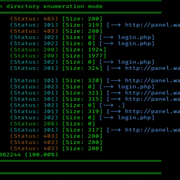
Example 2: DNS Subdomain Enumeration
Target: example.com
Command:
Code
gobuster dns -d example.com -w /usr/share/wordlists/dns/subdomains-top1million-5000.txtThis exposes subdomains that could be further investigated.
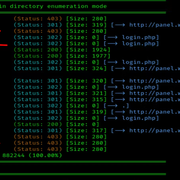
Example 3: Adding File Extensions
Target: http://IP.com
Command:
Code
gobuster dir -u http://IP.com -w /usr/share/wordlists/dirb/common.txt -x php,htmlThis ensures Gobuster checks for files with .php and .html extensions:
Tips for Using Gobuster
- Use optimized wordlists for the task at hand. Popular sources include:
- Code
/usr/share/wordlists/dirbuster/ - SecLists: Just search on Google and go to GitHub for Download
- Adjust thread count (-t) based on your system’s capability and the server’s performance.
- Consider using proxies or VPNs to avoid being blocked during scanning.
- Always get permission before scanning a target that isn’t yours!
Testing Gobuster in Your Virtual Lab
Step 1: Set Up a Vulnerable Web Application:
Use tools like DVWA (Damn Vulnerable Web Application) or OWASP Juice Shop in your virtual lab environment.
Ensure your lab has a web server running with directories and subdomains to discover.
Or explore different websites that offer Capture the Flag (CTF) challenges, such as Hack The Box, TryHackMe
Step 2: Run Gobuster Commands
In this example I use this website:
http://panel.wallet.dl
Code
gobuster dir -u http://panel.wallet.dl/ -w /usr/share/wordlists/dirbuster/directory-list-2.3-medium.txt -x php,html,txt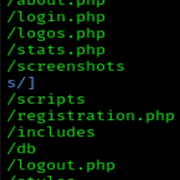
Test various Gobuster modes to explore the application and understand its capabilities.
Step 3: Analyze Results
- Review which directories, files, or subdomains were discovered.
- Use other tools or manual testing to further investigate any sensitive finding
Ethical Considerations
Gobuster is a powerful tool that must be used responsibly. Always be sure you follow this principles:
- Obtain explicit permission before scanning any target.
- Use it solely for ethical hacking, research, or educational purposes.
- Ensure your actions comply with legal and organizational guidelines.
Conclusion
Gobuster is an essential tool for ethical hackers and penetration testers, offering a fast and efficient way to discover hidden resources. With its straightforward syntax and versatility, it’s a valuable addition to any security professional’s toolkit. By practicing with Gobuster in your virtual lab or websites what offers CTF and exploring its various modes, you’ll gain hands-on experience and deepen your understanding of web application security.
Happy hacking ethically, of course!